CookedLabs
My Role
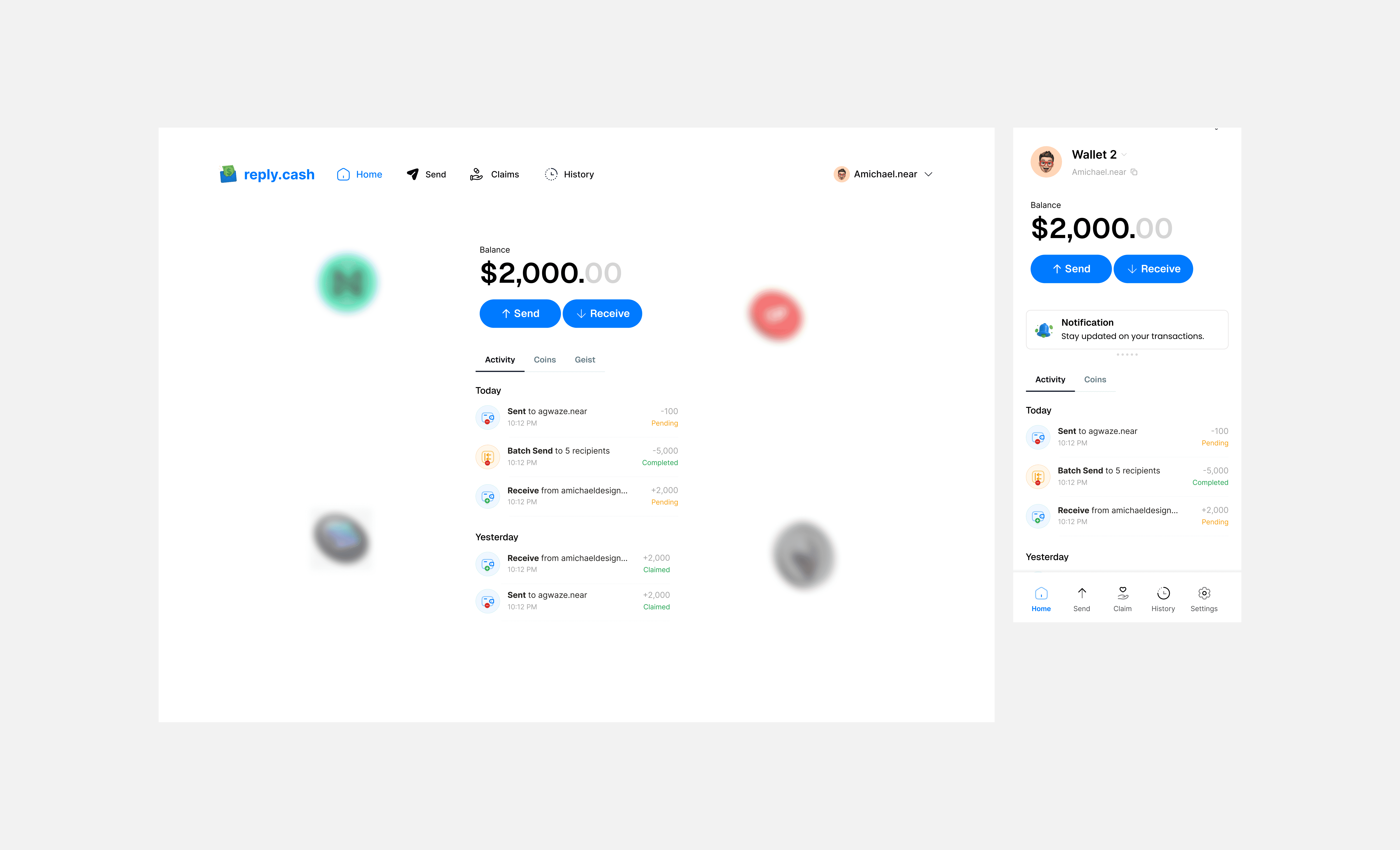
As the lead designer on the project, I was responsible for shaping the end-to-end product experience. I worked closely with the product manager, developers, and ecosystem partners to design the send-and-claim flow, build a mobile-first interface, and create the visual identity for the app. My focus was on making stablecoin transfers feel as simple as sending a message, while ensuring the product could scale across multiple platforms and regions.
Research Methods
User interviews, competitor analysis, usability testing, market research, and community feedback sessions.
Team Structure
1 Lead Designer (me), 1 Product Manager, 2 Developers, Ecosystem Partners (chain integrations, compliance advisors)
Platform
Mobile, Web
Duration
2 Months
Responsibilities
UX design, UI design, Research, User Testing, Motion
Reply.cash makes sending stablecoins as easy as sending a message. Users can send or receive USDC or USDT using social media handles like Twitter, WhatsApp, or Telegram no wallet setup or long addresses needed.
The idea is to remove the usual crypto friction. People can send funds, collect donations, or run giveaways from one place, even if they’re on different blockchains. Everything happens automatically in the background, including cross-chain swaps.
Objectives
The goal of reply.cash was not just to build another payments app, but to solve the real adoption barriers holding stablecoins back. The objectives focused on making the product simple, useful, and secure enough for everyday people to trust and use.

Make stablecoin transfers as simple as sending a message
Create an experience where users only need a social handle to send or receive funds no wallets, addresses, or technical setup required.

Expand the real-world utility of stablecoins
Enable use cases like donations, remittances, creator tips, and giveaways by making payments possible across everyday platforms.

Build a foundation for global scale
Prioritize integrations with widely used messaging and social apps, support multiple chains and stablecoins, and prepare for rollouts in regions with the highest adoption potential.

Establish trust through secure authentication
Use technologies like zkTLS and platform-based verification to protect users from impersonation and phishing, ensuring that funds always reach the right person.
Strategic Value
Reply.cash turns stablecoins into something anyone can use, not just people already in crypto. By tying payments to the social and messaging accounts people rely on every day, it removes the steep learning curve that has slowed adoption. This creates a clear path to scale: billions of people already live on WhatsApp, Telegram, and Twitter, but only a fraction have wallets.
For creators and communities, it opens up new revenue streams, donations, tips, giveaways, and remittances that can happen instantly and across borders.
For the ecosystem, it strengthens trust by combining simple UX with strong authentication, reducing fraud and impersonation risks.
And for the business, it positions reply.cash to grow into a regional payments leader: first as a walletless sender, and over time as a regulated stablecoin issuer with deep integrations across chains and platforms.

Made stablecoins accessible to anyone
People without wallets could now receive USDC or USDT through the platforms they already use, lowering the barrier to entry.

Unlocked new everyday use cases
Donations, giveaways, tips, and remittances became possible with just a social handle—expanding the role of stablecoins beyond trading.

Built confidence through secure flows
By using social authentication and zkTLS, the app reduced impersonation risks and gave users trust that funds would always reach the right recipient.
The Challenges
Building reply.cash meant tackling some of the biggest obstacles standing in the way of mainstream stablecoin adoption.
Wallet dependency
Most people don’t have crypto wallets, and setting one up with seed phrases, gas fees, and long addresses creates a steep barrier to entry.
Unreliable identifiers
Emails and phone numbers are often recycled, forgotten, or spoofed—making them a weak foundation for financial transactions.
Risk of impersonation and fraud
Social media impersonation is common, especially in giveaways and community projects, creating a real threat to trust.
Cross-chain complexity
Stablecoins exist on multiple blockchains, but managing different addresses for each chain made sending and receiving confusing for ordinary users.
User trust in security
Even with simple UX, people won’t use a payments app unless they believe their money is safe balancing simplicity with strong authentication was a core challenge.
The Plans

Build a simple send-and-claim flow that works with just a social handle

Use platform sign-in to stop fake accounts and impersonation

Let users send from a platform and withdraw funds to any chain

Show clear status updates and fees so every payment feels safe

Start in regions with high stablecoin and messaging use, then expand gradually
Reserach & Discovery
Before designing reply.cash, we explored how people actually think about money, messaging apps, and stablecoins. The research included user interviews, competitor reviews, and looking at adoption patterns in high-growth regions. From this, we uncovered five key findings.

User Interviews
We spoke with 6 people across regions like Africa, Latin America, and Southeast Asia to understand how they currently send and receive money, their trust habits, and their pain points with crypto wallets.

Competitive Analysis
We reviewed existing products such as Coinbase’s email transfers, MiniPay by Celo, moneygram and custodial wallets to see how they handle USDC payments and where users still face friction.

Market Research
We studied stablecoin adoption trends, focusing on regions where remittances and dollar demand are highest, and mapped them against the most widely used messaging platforms.

Remittance Senders
Create a profile and connect their social account (WhatsApp, Telegram, Twitter).
Send stablecoins to family and friends using just a handle instead of a wallet address.
Top up balance from an exchange or in-app wallet.
Track whether the recipient has claimed the funds.
Help recipients withdraw funds into local wallets or cash-out services.
Wallet Setup Barriers: Neither sender nor recipient wants to deal with wallet creation, seed phrases, or gas fees.
Cross-Border Friction: Traditional money transfers are slow and costly, while crypto transfers often feel too technical.
Trust Concerns: Fear of sending to the wrong person or address.
Unclear Transaction Status: Anxiety when they can’t easily track whether the money was received.

Online Creators
Share their social handle (Twitter, Telegram, GitHub) to receive donations or tips.
Claim stablecoins sent by their fans or community through a simple verification flow.
Check balances, track incoming payments, and manage multiple small transactions.
Move claimed funds to an external wallet or exchange for personal use.
Run small giveaways or reward fans with direct stablecoin transfers.
Impersonation Risks: Fake accounts during giveaways or donation drives hurt trust.
Limited Payment Options: International fans struggle to support them through banks or local payment apps.
Multiple Wallets/Addresses: Managing different chain addresses for donations is confusing.
High Platform Fees Elsewhere: Traditional platforms (Patreon, YouTube, PayPal) charge high fees or delay payouts.

Community Organizers/NGO
Set up a verified profile for the organization.
Share a social account handle (e.g., Telegram group, Twitter account) to collect donations.
Receive stablecoins directly into the organization’s account, without creating multiple wallets.
Track donation activity and ensure funds are claimed securely.
Withdraw funds into a single wallet or distribute to team members.
High Transaction Costs: Traditional fundraising platforms take large fees or require intermediaries.
Technical Barriers: Staff often lack crypto knowledge to manage wallets and keys.
Donor Trust: Donors worry about scams and need assurance their money reaches the right community.
Cross-Border Access: Receiving donations internationally is slow and often blocked by local banking rules.
Fraud & Security Risks: Risk of fake accounts impersonating NGOs to divert funds.
Insights & Recommendation
After building the MVP and running several rounds of user testing, interviews, and feedback sessions, we identified key patterns in how people interacted with reply.cash. These insights helped us refine the product to better meet real user needs. For each insight, we defined a clear recommendation to guide the next stage of design and development.
Insight 1
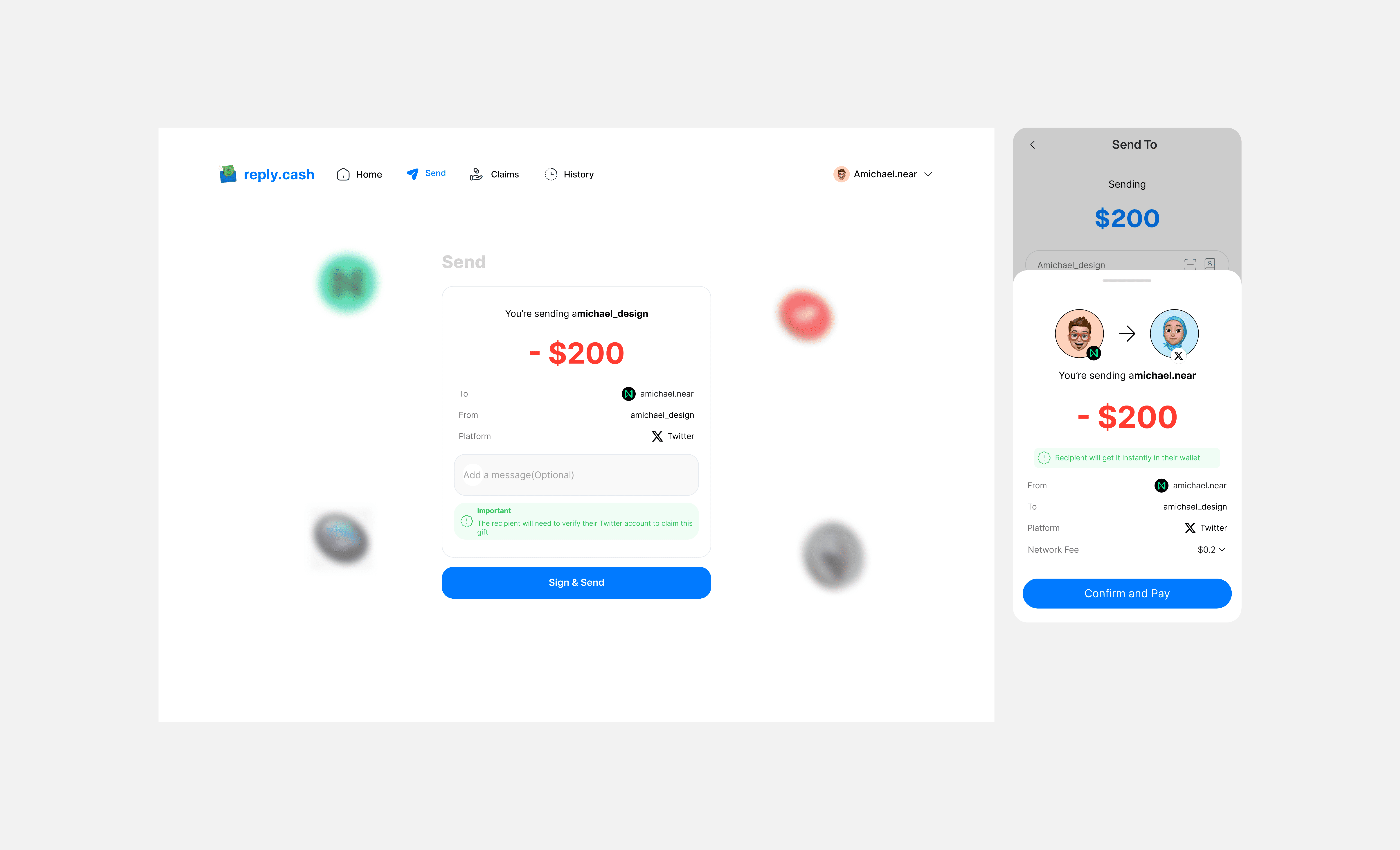
Users are more comfortable sending money to a familiar handle than to a long crypto address.
Recommendations 1
We made social handles the default way to send, with wallet addresses available only as an advanced option.
Insight 2
Wallet setup and seed phrases created the biggest drop-off for new users.
Recommendations 2
We decided to move anything wallet related until after the first claim and provide a lightweight in-app wallet so users can hold funds before choosing to withdraw.
Insight 3
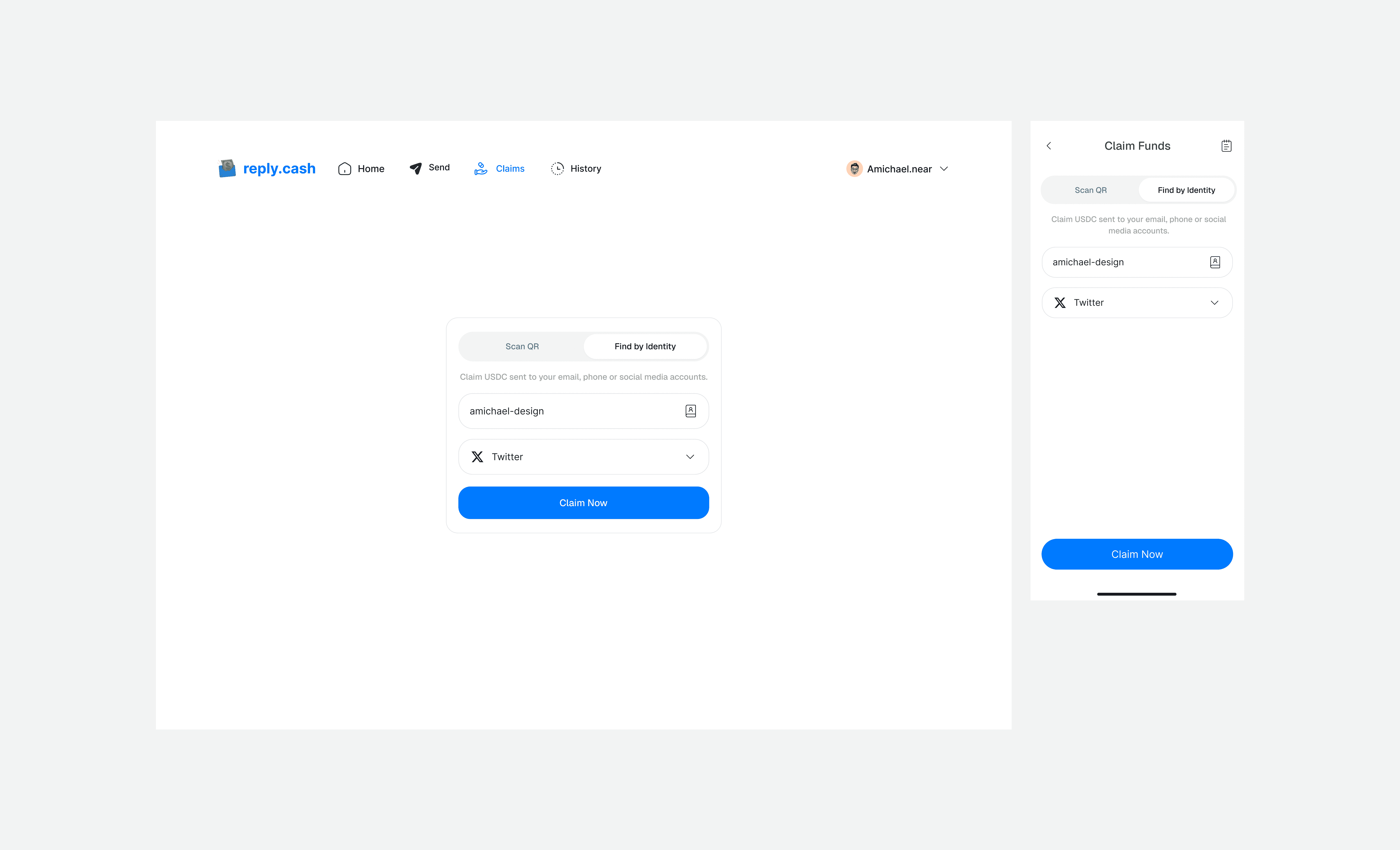
Impersonation is a real threat for creators and NGOs, especially during giveaways and donation drives.
Recommendations 3
Use platform sign-in (WhatsApp, Telegram, Twitter) and visible verification badges to confirm that funds are going to the correct account.
Insight 4
Most users don’t understand blockchain details but still want control over their funds.
Recommendations 4
We kept the send and recieve flow simple and chain-agnostic, while letting recipients choose their preferred chain at withdrawal.
Learnings
Building reply.cash from MVP to live tests gave us valuable lessons about both users and the product itself. These learnings came from interviews, usability sessions, and observing how people interacted with early prototypes in real-world scenarios.
Testing showed that users responded best when the entire send-and-claim process was reduced to just a few clicks. Any added complexity quickly created friction.
Even with a smooth UX, people hesitated without clear signals of safety. Verified accounts, transaction states, and transparent fees were critical to building confidence.
Handles felt natural and trustworthy compared to emails, phone numbers, or wallet addresses. They were the most consistent way people wanted to identify others.
The same simple flow could be applied to remittances, creator tips, and community donations. This flexibility increased the product’s relevance across very different contexts.
Next Steps
After validating the core send-and-claim flow, the next phase is to expand reply.cash beyond peer-to-peer payments. The goal is to add more impactful use cases and introduce features that strengthen the app’s long-term value for users.
Allow people to donate directly to verified NGOs and community organizations through their social handles. This opens reply.cash to social impact use cases while keeping the flow simple.
Give users the ability to earn yield on unclaimed or stored funds. This adds an investment layer that turns reply.cash from a simple payment app into a platform for both giving and growing stablecoin balances.
Copyright 2024 by Adewale Michael