
Potlaunch
A cross-chain token launchpad that simplifies how projects create, sell, and manage tokens on Solana, NEAR, and other blockchains, all in one clean interface.
Platform
Web
Duration
3 months
Responsibilities
UX design, UI design, Research, User Testing, Motion
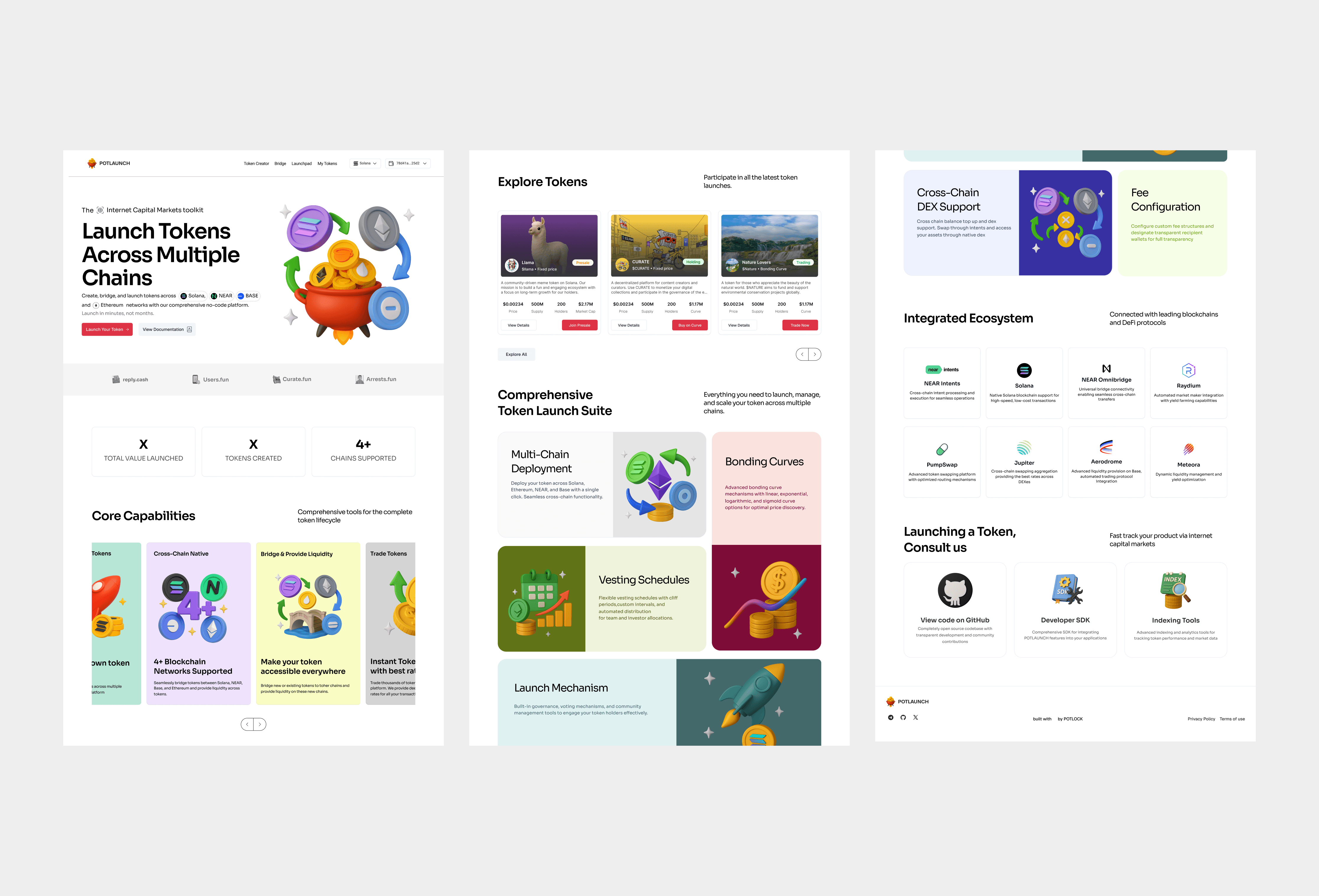
POTLAUNCH bridges design simplicity with blockchain depth. It lets users create tokens, configure sale mechanics (like fixed price or bonding curve), and set liquidity options with clear visual guidance.
Instead of switching between multiple platforms for creation, sale, and DEX listing, everything happens in one interface. The design approach focused on progressive disclosure showing complexity only when needed. The result was a flexible launchpad that feels light but powerful, built for both new and experienced users.
Objectives
We began the project with three main objectives that shaped every design decision.

Simplify Token Creation and Launch
Design a clear, step-by-step experience that helps users mint and launch tokens in minutes, without coding or blockchain confusion.
Unify Cross-Chain Launching
Allow projects to launch tokens across multiple chains through one platform, starting with Solana and NEAR.

Improve Trust and Transparency
Design sale pages that clearly communicate allocation, vesting, and tokenomics — helping investors make informed decisions.
Strategic Value
POTLAUNCH isn’t just a tool, it’s a bridge between builders and their communities. By integrating features like cross-chain minting, bonding curve configurations, and liquidity display, it removes the intimidation of blockchain setup. The design set a visual and functional standard for future launch tools, creating a template that other ecosystem projects could adapt or white-label.

Guided Token Launch Flow
We transformed a multi-step, highly technical process into an intuitive, step-by-step interface that walks users from token creation to live launch. This reduced setup friction and minimized errors for non-technical founders.

Modular Launch Architecture
We built a modular system that supports multiple launch types — fixed price, bonding curve, and community rounds. Each type follows the same familiar layout, making it easy for users to navigate even across different blockchains.

Visual Liquidity & Sale Tracking
We introduced live liquidity and sale tracking dashboards that visualize a project’s progress post-launch. This feature improved transparency, helping both founders and investors monitor performance and build trust in real time.
The Challenges
Every design decision came with technical and UX constraints that shaped the final product.
Translating Blockchain Logic into Visual Simplicity
Token creation involves smart contracts, decimals, and metadata all invisible to average users. The challenge was making these complex steps intuitive without oversimplifying.
Designing for Multi-Chain Consistency
Each blockchain has unique standards and terminology. The UI needed to handle chain-specific flows while maintaining one cohesive experience.
Managing Token Sale Complexity
Features like bonding curves and refund mechanics had to be explained visually to prevent missteps by non-technical users.
Building Liquidity Without Confusion
Many users didn’t understand how liquidity pools or DEX listings connected to their token sale. We had to visually connect those flows in the token details page and dashboard.
Avoiding Overload in a Power-User Interface
The app had to be data-rich for experienced users but approachable for beginners — balancing flexibility with focus.
The Plans
To address these challenges, we focused on design-led strategies that prioritized clarity, adaptability, and control.
Create a guided step-by-step token creation flow with real-time validation.
Standardize cross-chain layouts to look and behave consistently across NEAR and Solana.

Add visual bonding curve previews so users can see token price progression before launch.
Design a liquidity dashboard that clearly separates token creation, sale, and pool deployment.
Include contextual tooltips and info cards to explain blockchain terms within the interface.
Research & Discovery
Our research focused on understanding how founders currently launch tokens and where they struggle most.

User Interviews
Conducted sessions with 8 project founders to understand their pain points with existing launchpads.

Competitive Review
Studied platforms like Pump.fun, Fjord Foundry, and Solsale to analyze UX patterns and gaps.
Technical Mapping
Worked with developers to identify where UI could simplify contract calls or automate wallet actions.

Prototype Testing
Tested early interactive flows with mock tokens to observe drop-offs and confusion points.

The Builder / Founder
Founders, builders, or small teams launching tokens for startups, DAOs, or community projects.
Create and configure tokens using guided launch options.
Set sale parameters, vesting schedules, and liquidity settings.
Track launch performance through the analytics dashboard.
Manage post-launch liquidity and update project details.
Complex setup forms make it hard to know which parameters matter most.
Confusion around bonding curves and how pricing evolves.
Difficulty tracking performance across multiple blockchains.
Anxiety about transaction confirmations and contract deployment errors.

The Investor / Participant
Crypto users and community supporters who buy into token launches to back projects early.
Browse active and upcoming launches to evaluate opportunities.
Contribute tokens during live sales.
Track project progress, liquidity status, and vesting schedules.
Claim or withdraw purchased tokens post-launch.
Unclear launch stages and timelines create uncertainty.
Hard to interpret charts, bonding curve projections, and allocation breakdowns.
Limited visibility into project legitimacy and team verification.
Frustration with waiting for liquidity unlocks or bridge confirmations.

The Ecosystem Partner
Cross-chain service providers, DEX platforms, or other ecosystem partners integrating POTLAUNCH tools.
Integrate launch widgets and bridge modules into existing ecosystems.
Facilitate liquidity pools and automate cross-chain swaps.
Manage and verify token listings across connected networks.
Monitor network-level performance and transaction reliability.
Integration friction between different DEX or RPC endpoints.
Missing documentation or SDK inconsistencies for developers.
Difficulty maintaining consistent UI/UX standards across partner apps.
Coordination challenges around version updates and deployments.

The Community Member
Casual users, token enthusiasts, or community members who follow projects for updates or to explore new launches.
Browse new and trending token launches.
Share project links or embed widgets in community spaces.
Monitor token trends and liquidity metrics from the dashboard.
Participate in social-driven activities like giveaways or airdrops.
Pain Points
Overloaded dashboards make it hard to know where to start.
No easy way to follow or bookmark favorite projects.
Limited understanding of blockchain terms and on-chain transactions.
Fear of interacting with unverified or scam projects.
Insights & Recommendation
After prototype testing and internal QA, we identified key user behavior insights that shaped major UI improvements.
Insights 1
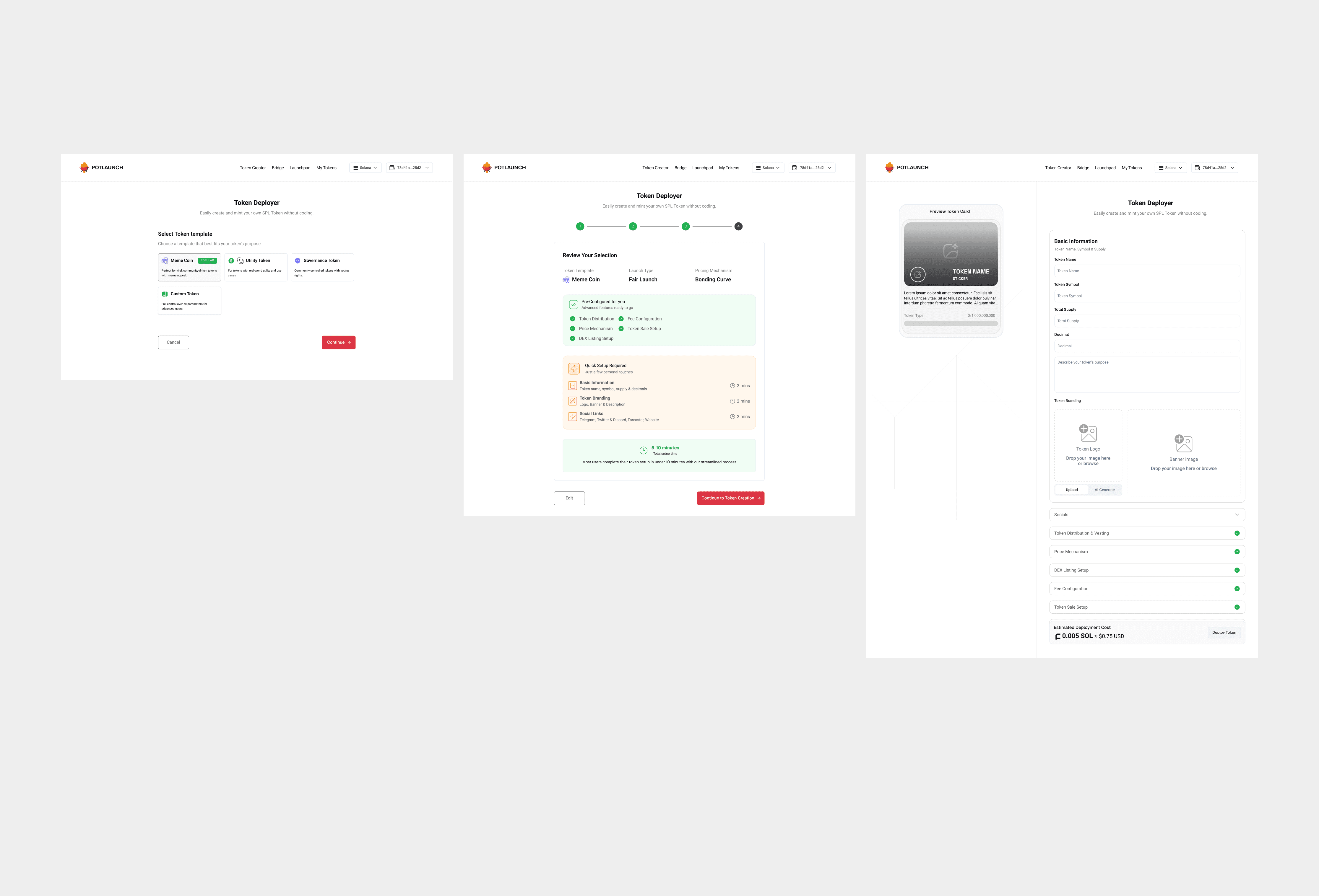
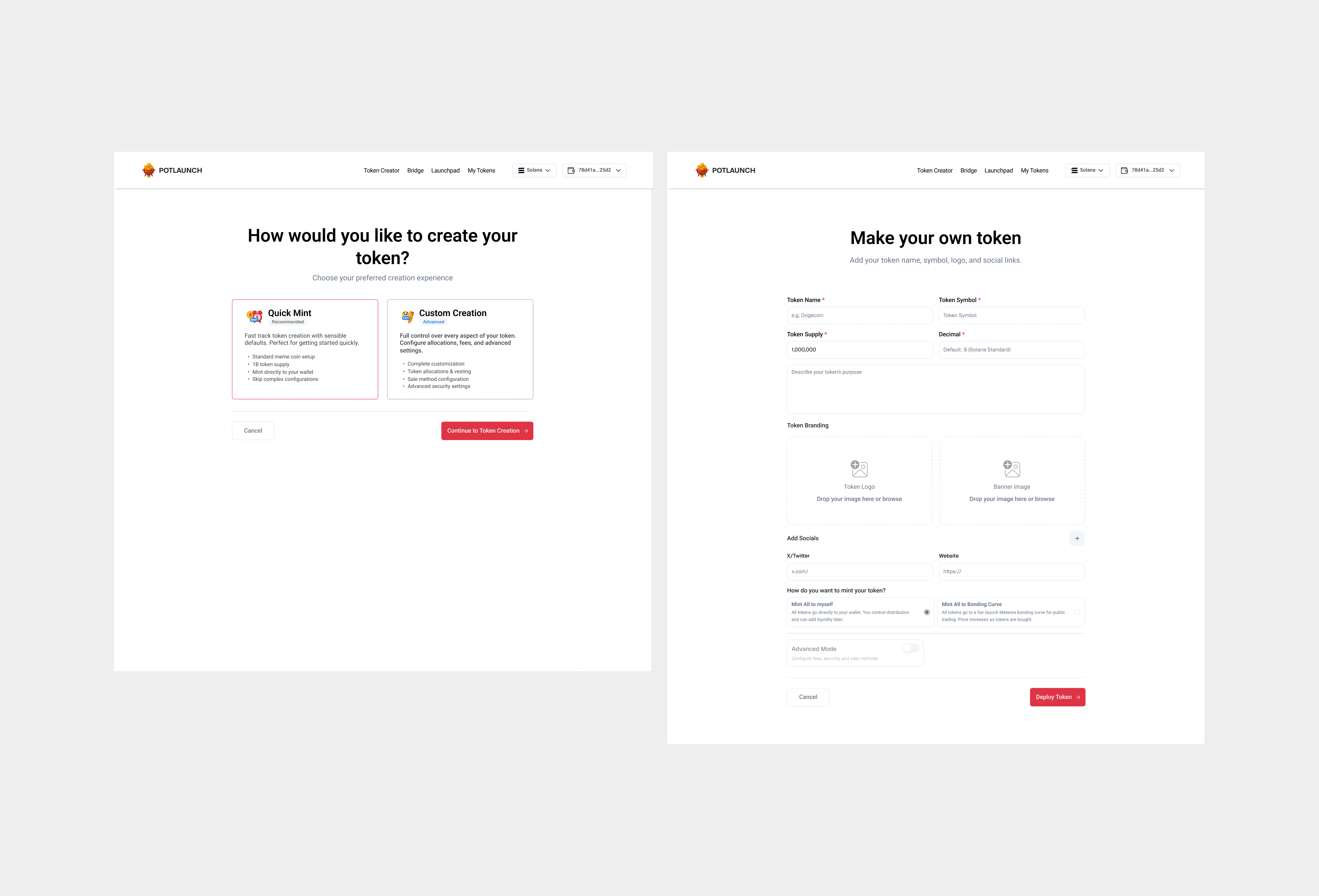
Users were overwhelmed by too many setup fields and unclear template options.
During testing, many users got confused by the number of inputs required to create a token. The distinction between launch templates (like fixed, bonding curve, or fair launch) wasn’t immediately clear, leading to drop-offs or incomplete setups.
Recommendations 1
We studied leading platforms like Pump.fun and Flaunch to understand why users preferred simpler flows. Based on this, we redesigned the creation form to default to a basic “fair launch” setup that’s instantly usable. For users who need more customization, an “Advanced Settings” toggle reveals additional configuration options. This approach reduced confusion and made the experience feel faster and more competitive with other launchpads.
Insights 2
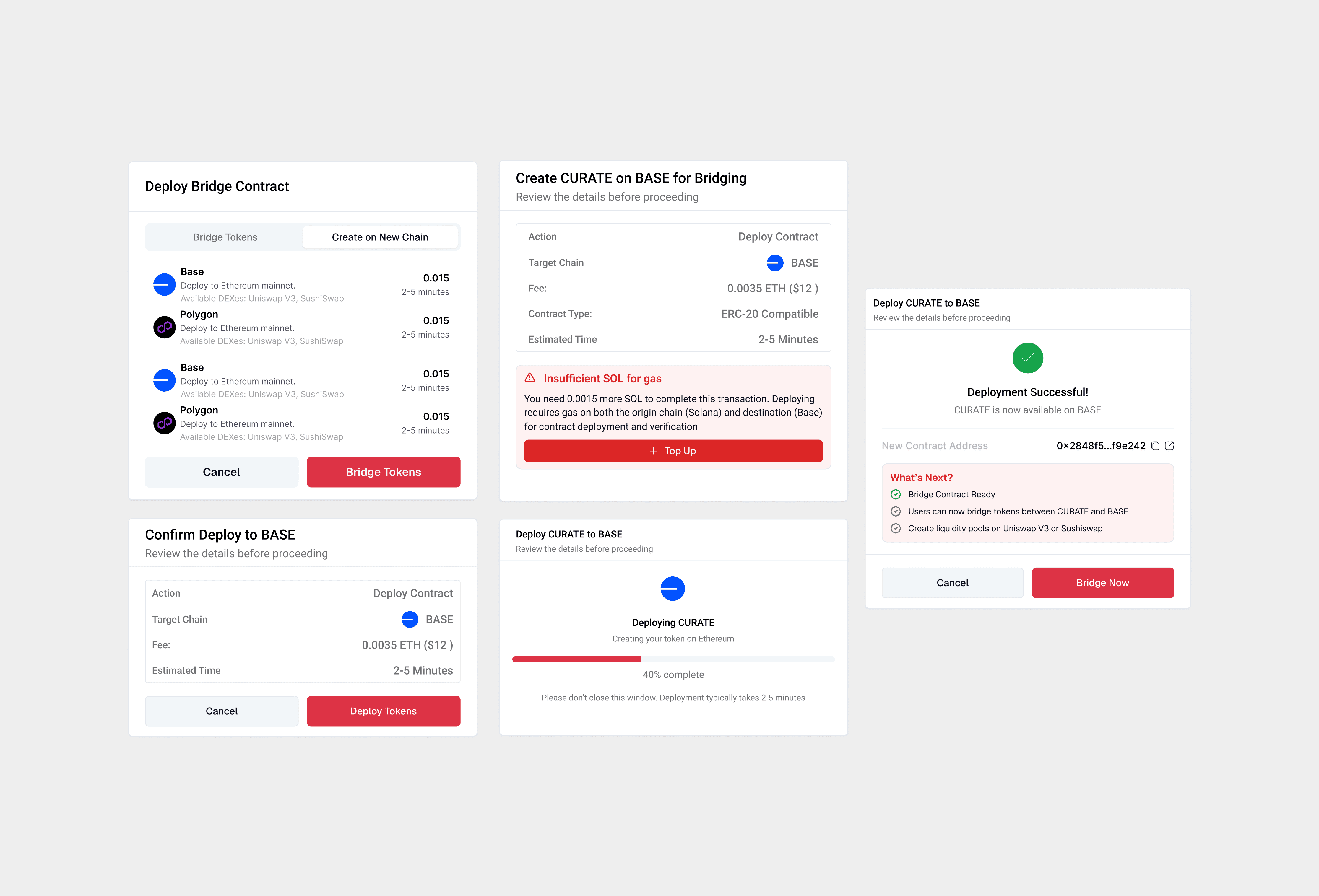
Users struggled to understand the multi-step bridge and liquidity deployment flow.
During testing, users found the bridging and liquidity setup process overwhelming. They weren’t always sure what each step represented or when the operation was complete. The technical language caused hesitation especially for non-developers trying to launch across chains for the first time.
Recommendations 2
We introduced a progressive confirmation system that simplifies the flow into visual milestones Bridge, Deploy, Confirm, Complete. Each modal now includes plain-language summaries, contextual tooltips, and clear progress states. We also added inline feedback (e.g., “Bridge Successful” or “Liquidity Added”) and transaction tracking to reassure users at every step. These changes reduced user anxiety and made complex multi-step blockchain actions feel predictable and transparent.
Insights 3
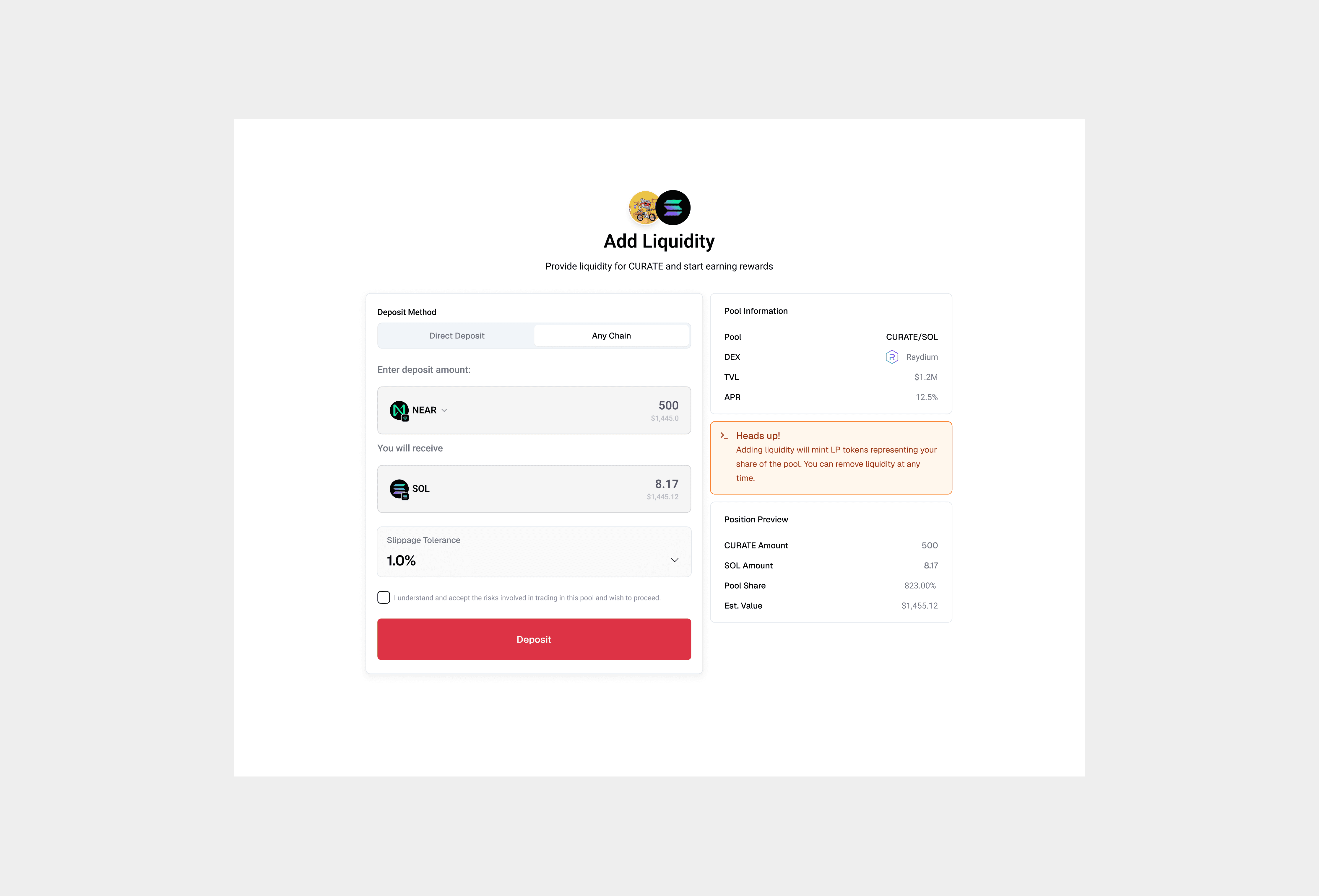
Users were confused about how to swap tokens or add liquidity after launch.
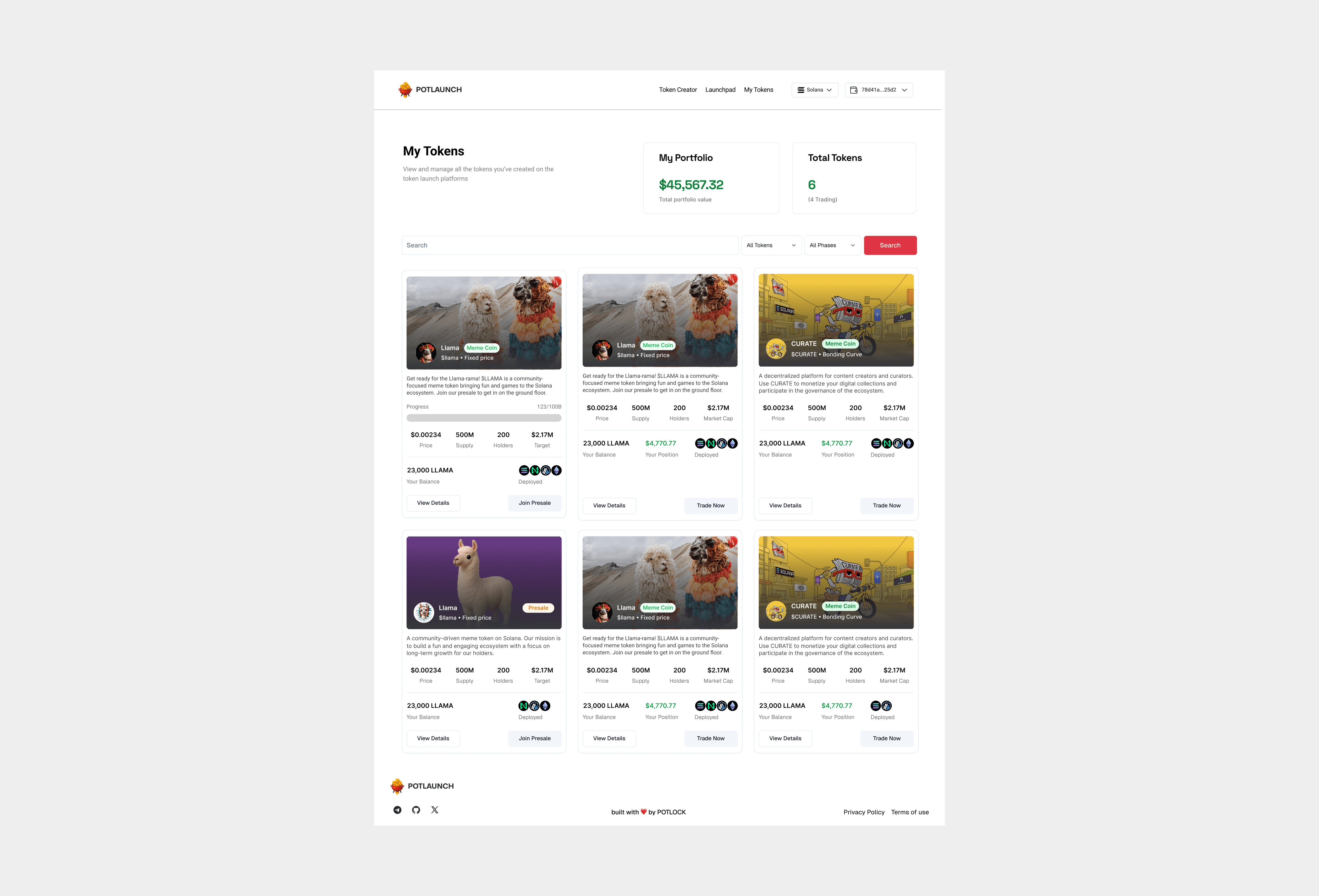
During user testing, we noticed many participants weren’t sure how to interact with their tokens post-launch. Some expected a built-in swap option, while others didn’t understand how their liquidity affected trading pairs. This gap caused unnecessary friction and made the launch process feel incomplete.
Recommendations 3
We designed a dedicated Swap page that clearly connects to each launched token. The interface allows users to swap, add, or remove liquidity without leaving the POTLAUNCH environment. We also added contextual tips explaining token pairs, fees, and real-time exchange rates. This improved continuity users could now complete every key action (create, launch, swap, and manage liquidity) in one consistent flow.
Insights 4
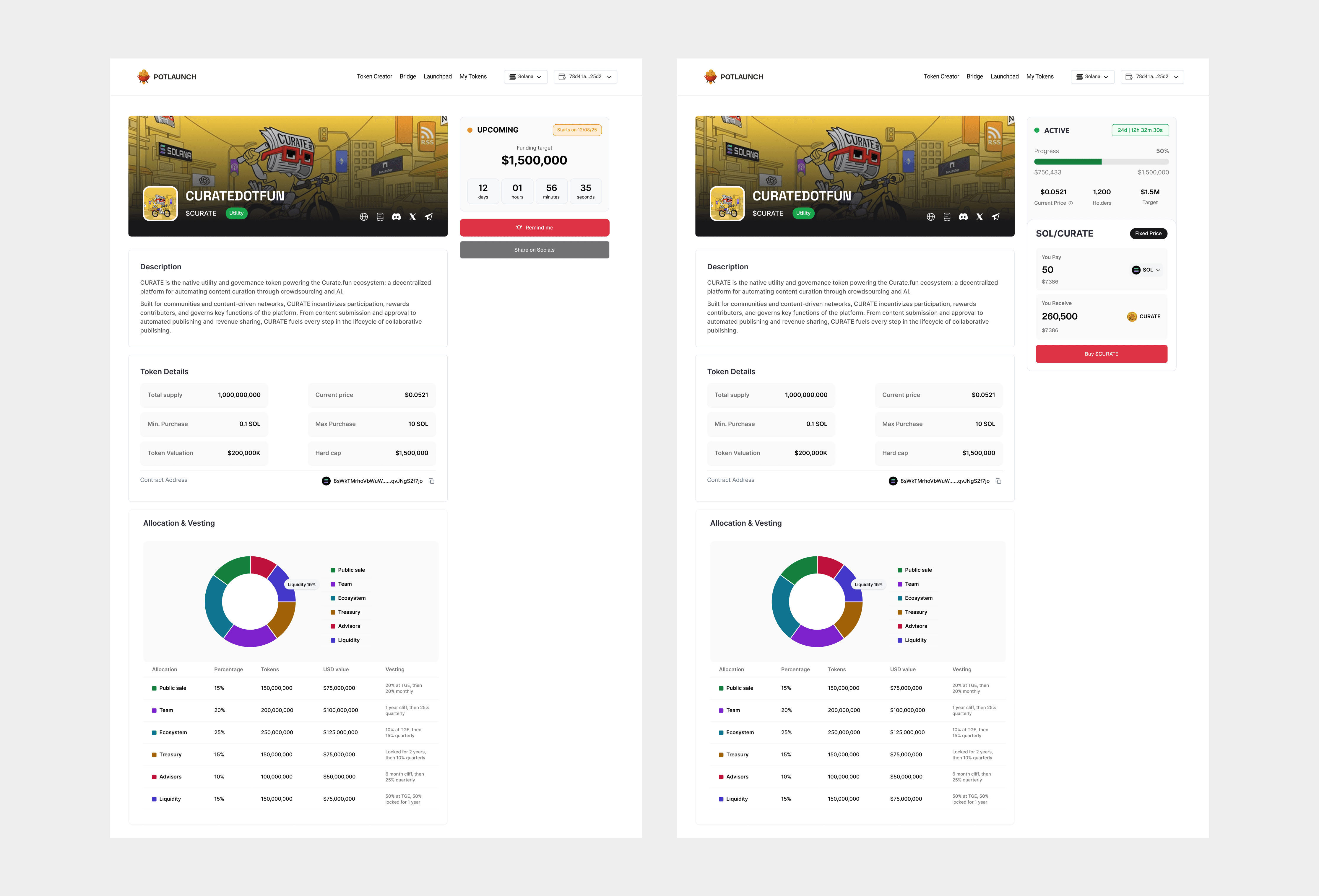
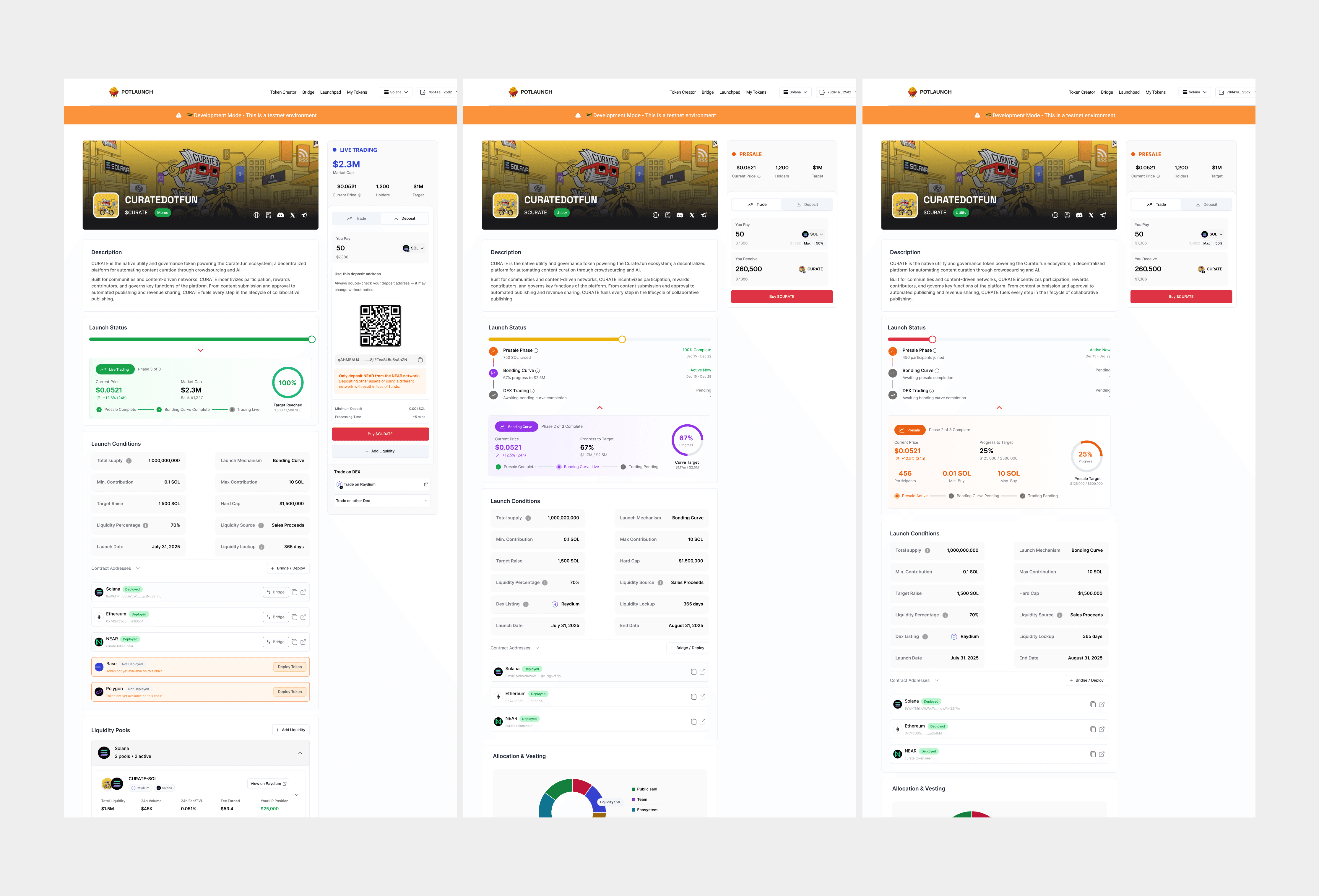
Users found it hard to understand how different launch stages connected from pre-sale to live trading and post-launch analytics.
Early usability tests showed that most users couldn’t easily tell what stage a project was in or what actions were available at each phase. They had to navigate between multiple pages or recheck transaction statuses manually. This made the experience feel fragmented and intimidating, especially for first-time project owners.
Recommendations 4
We unified all three stages: Pre-Launch, Live Launch, and Post-Launch Analytics—into a single, evolving details page. Each state updates automatically as the project progresses, visually guiding users through setup, sale, and live trading. Clear indicators, progress bars, and contextual call-to-actions help users instantly know what to do next.
Learnings
Building POTLAUNCH taught valuable lessons about designing for transparency and scalability in Web3.
Reducing steps in the launch flow helped users trust the product faster.
Charts and progress indicators turned complex DeFi mechanisms into something intuitive.
Working closely with developers early on helped us align UI with contract logic.
Unifying cross-chain layouts made the app feel like one ecosystem, not a collection of separate tools.
Copyright 2024 by Adewale Michael