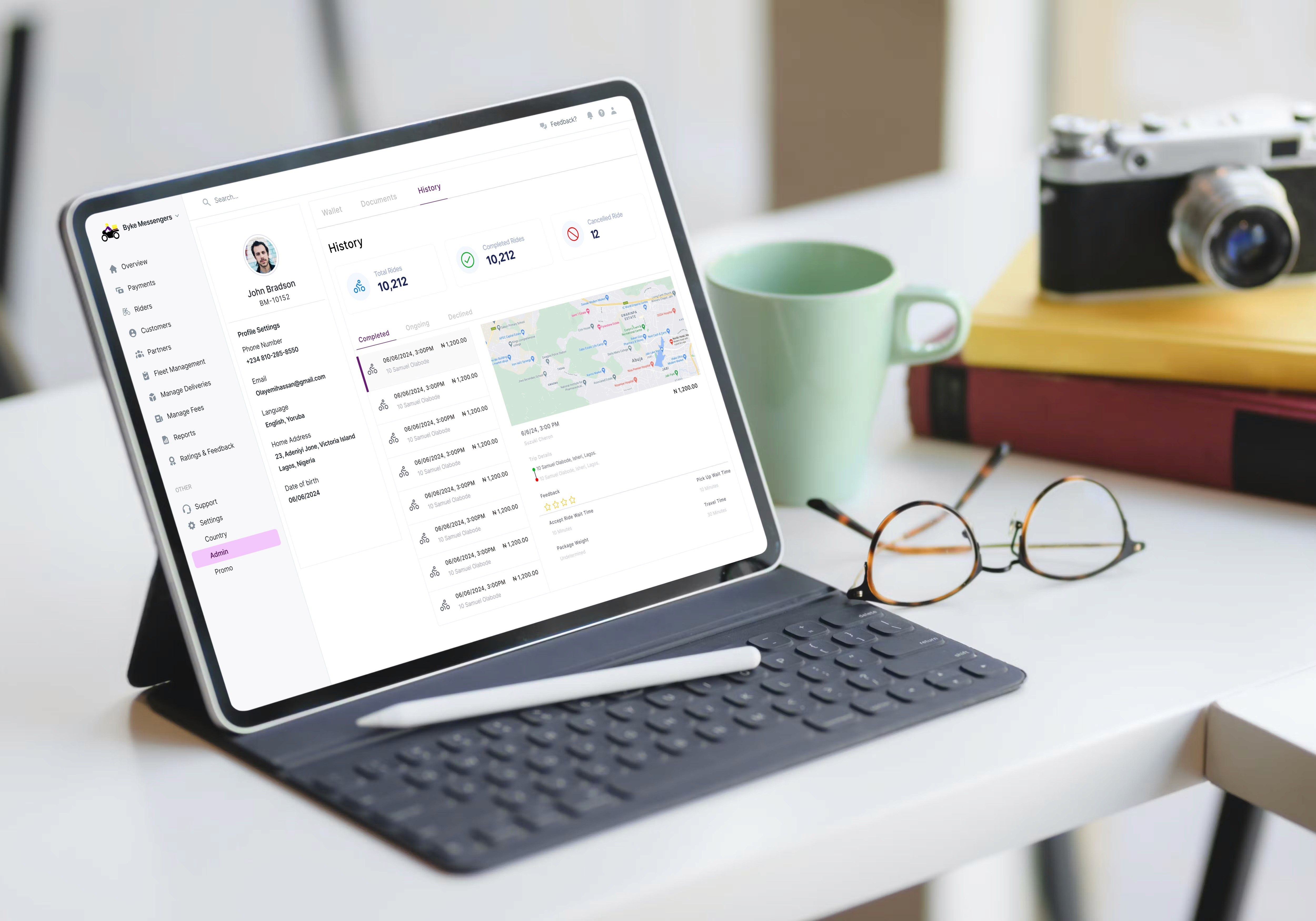
Byke Messengers
My Role
As the lead UI/UX designer on this project, I was responsible for developing a user-centric dashboard that catered to the needs of administrators and dispatchers. I collaborated closely with a multidisciplinary team that included another UX/UI designer, a brand designer, a developer, and a project manager. My focus was on creating an intuitive interface that streamlined order management and enhanced operational efficiency.
Platform
Web, Mobile
Duration
3 Weeks
Responsibilities
UX Design, UI Design, User Research, User Testing
Overview
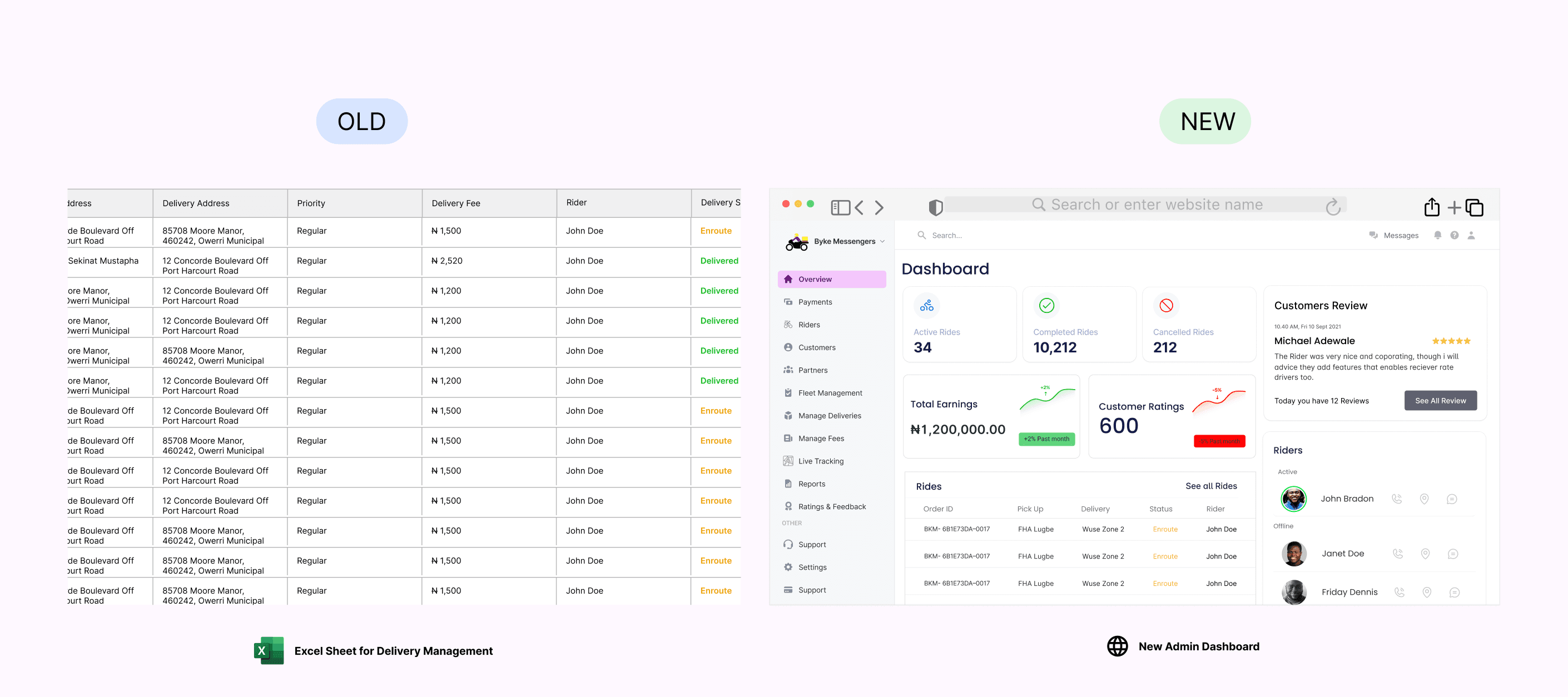
Have you ever felt the frustration of managing a team with outdated tools, like juggling spreadsheets and endless email threads? Imagine trying to coordinate deliveries while constantly wondering where your riders are or if they’ve even picked up the packages. This was the reality for the administrative team at Byke Messenger, who were struggling to keep up with their operational demands usingExcel sheets.
To tackle these challenges head-on, we embarked on a mission to develop a comprehensive dashboard that would streamline operations, enhance communication, and provide real-time insights for better decision-making.
Research Methods
User interviews, competitor analysis, usability testing, and observational research.
Team Structure
2 UX Designers, Brand Designer, Developer, Project Manager
Objectives
The primary objectives for developing the dashboard were
Centralized Order Management
Create a unified platform that consolidates all order-related activities, allowing dispatchers to manage and track orders seamlessly from a single interface.

Real-Time Monitoring
Implement features that provide visibility into delivery statuses, rider locations, and performance metrics to facilitate informed decision-making.

Enhanced Communication
Establish efficient communication channels between dispatchers and riders to reduce misunderstandings and improve service coordination.

Data Driven Insights
Equip Byke Messenger with actionable analytics to optimize operations and support strategic business decisions.
Strategic Value
The dashboard was strategically designed to address significant operational challenges while enhancing user experience. By transitioning from manual processes reliant on Excel sheets to a centralised digital platform.

Streamlined Workflow
The intuitive interface enabled faster and more accurate processing of orders, resulting in enhanced overall efficiency.
Improved Real-Time Tracking
Enhanced visibility into order statuses allowed for more informed decision-making and quicker response times to issues as they arose.

Effective Communication Tools
Integrated messaging features facilitated clearer communication among team members, leading to improved coordination and teamwork.
The Challenge
Despite the successful implementation of the Byke Messenger mobile app, the company still faced significant challenges in managing orders, personnel, and deliveries. The administrative team relied heavily on Excel sheets to manage transactions, which created a host of inefficiencies.
Fragmented Order Management
Dispatchers struggled with tracking orders across multiple platforms, leading to inefficiencies and delays in deliveries.
Lack of Real-Time Data
The absence of real-time tracking hindered timely decision-making; dispatchers needed up-to-date information on rider locations and delivery statuses.
Limited Performance Metrics:
Management lacked access to detailed performance data, making it difficult to identify areas for improvement.
Inability to Access Personnel Records on the Go
Riders often struggle to present necessary documentation, such as bike documents and medical records, during accidents or police stops, leading to complications and delays.
The Plan
The plan for this project is to create a sophisticated dashboard that would allow the admin to manage deliveries and personnel efficiently.:

Centralized Order Management
Real-Time Monitoring
Enhanced Communication Tools

Payment Management

Information Management(Rider,Fleet,Partner & Country)
Research & Discovery
To inform the design process effectively, I engaged in comprehensive research activities

Stakeholder Interview
Conducted discussions with dispatchers, riders, and management staff to gather insights into their daily operations and pain points.

Competitive Analysis
Analyzed similar logistics applications in cities like Lagos to benchmark features and identify best practices.

Dispatchers
Manage and assign delivery orders to riders.
Monitor real-time status of deliveries and rider locations.
Communicate with riders regarding updates or issues.
Difficulty tracking orders across multiple platforms, leading to inefficiencies.
Lack of real-time data causes delays in decision-making.
Inefficient communication channels lead to misunderstandings.

Administrator
Oversee overall operations and performance metrics.
Manage user accounts and permissions within the dashboard.
Analyze data for operational insights and improvements.
Limited access to detailed performance metrics hinders informed decision-making.
Time-consuming manual processes for managing records and transactions.

Management
Review operational reports and analytics for strategic planning.
Approve significant changes or updates to each State/Country.
Ensure compliance with regulatory standards and operational guidelines
Lack of visibility into day-to-day operations can lead to uninformed decisions.
Difficulty in identifying areas for improvement due to insufficient data.
Insights & Recommendations
Insight 01
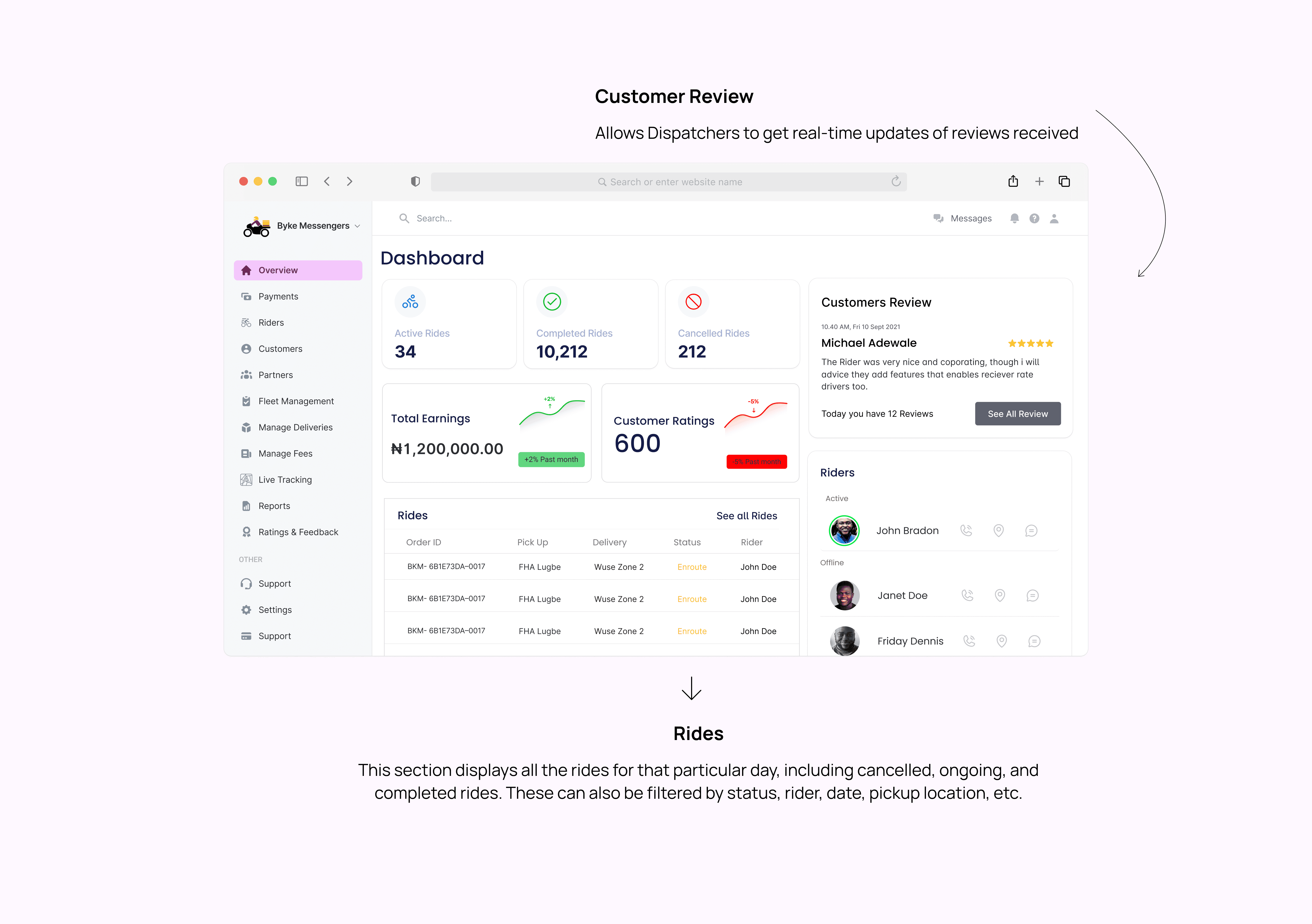
Dispatchers faced challenges managing orders across multiple tools, leading to inefficiencies, while management lacked access to detailed performance data for informed decision-making.
Recommendation 01
Develop a centralized dashboard that consolidates all order-related activities and provides analytics tools for actionable insights into operational performance.
Insight 02
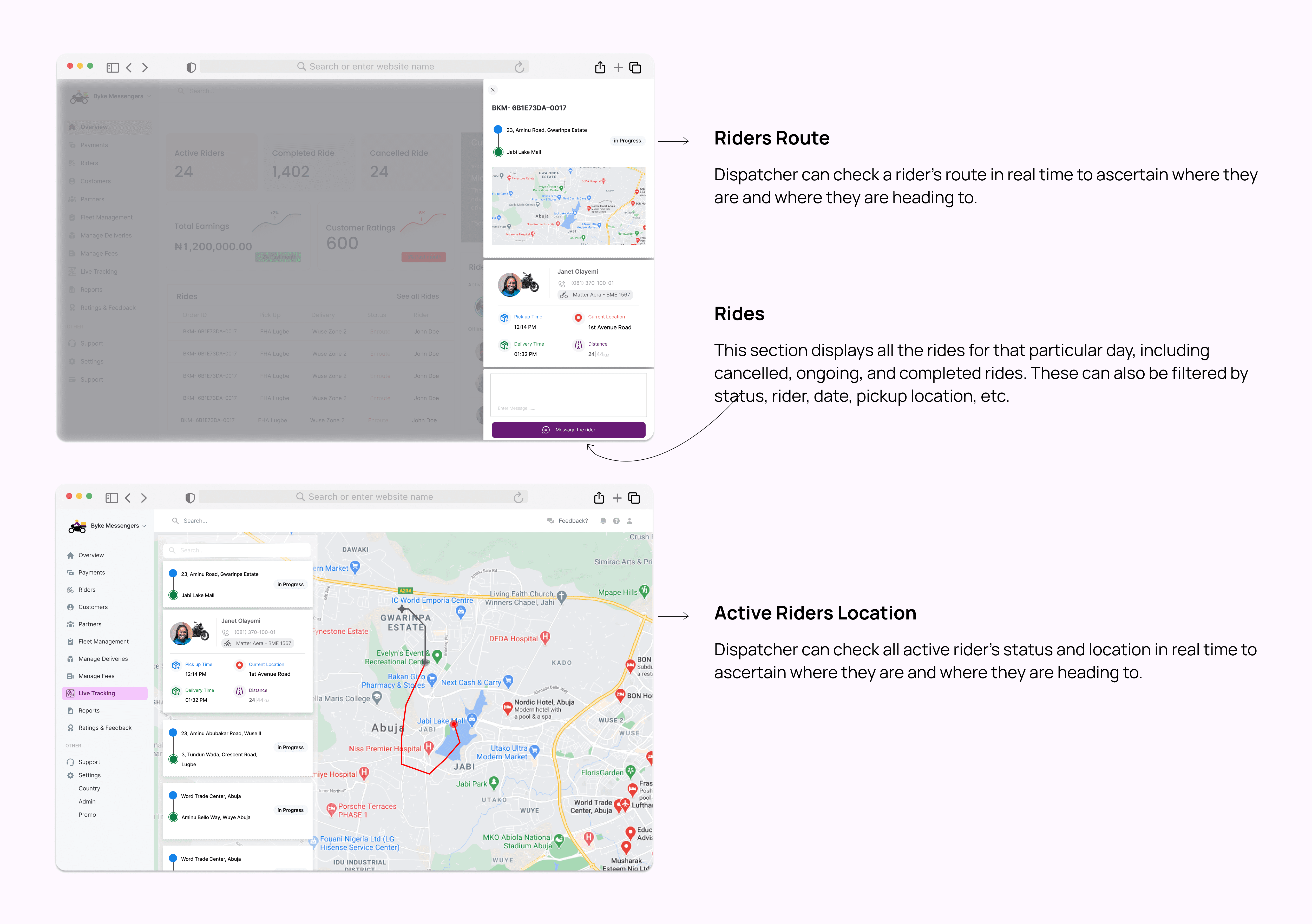
The absence of real-time tracking created delays in decision-making.
Recommendation 02
Integrate GPS tracking features that allow dispatchers to monitor rider locations in real-time.
Insight 03
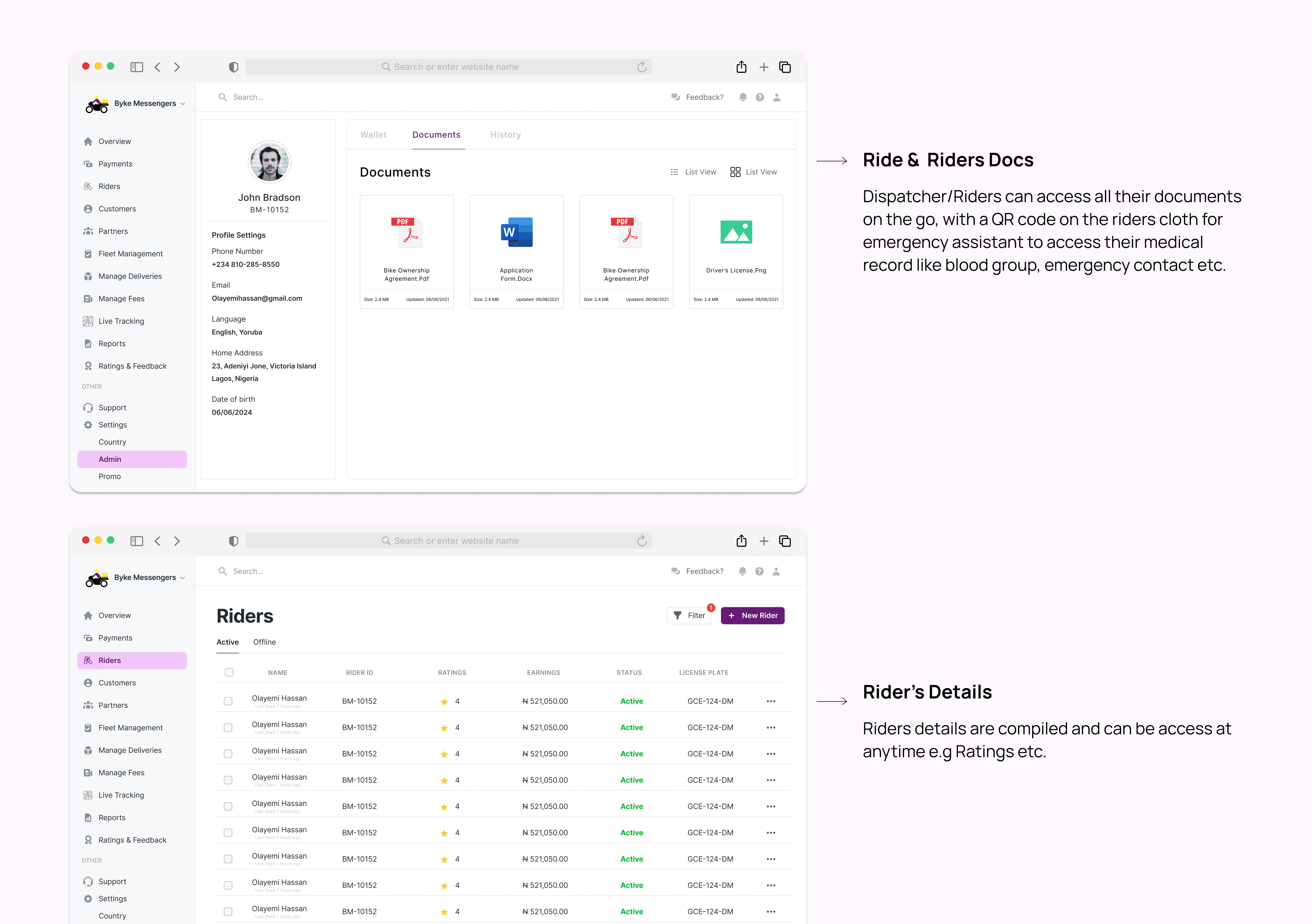
Difficulty accessing rider information hindered compliance checks, and riders struggled to present necessary documentation during accidents or police stops.
Recommendation 03
Create a dedicated section within the dashboard that captures all necessary rider documentation, including medical records, for easy access on the go.
Insight 04
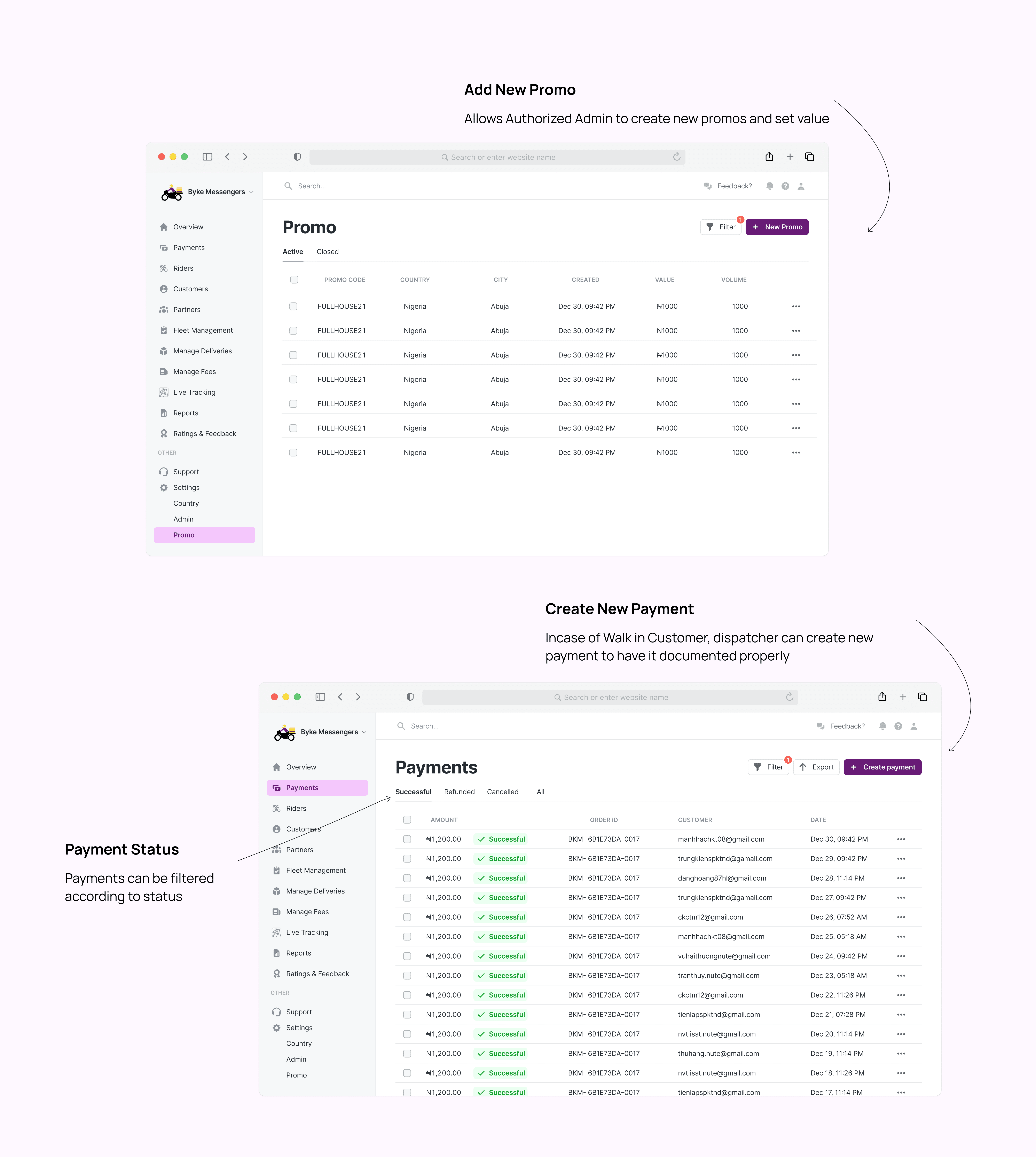
Users expressed interest in promotional offers but found it challenging to navigate because each dispatcher on duty tried to offer customers discounts based on personal discretion. Also, the lack of visibility into payment statuses created confusion regarding financial transactions, as transaction statuses had to be verified manually and entered into the sheet. Also, they had to request bank statements at the end of each month and verify them with the sheet to ensure correspondence.
Recommendation 04
Introduce a dedicated section for promotions where admins can set up promo codes and durations, along with a transactions section that allows viewing all payments and their statuses in real-time.
Recommendation 05
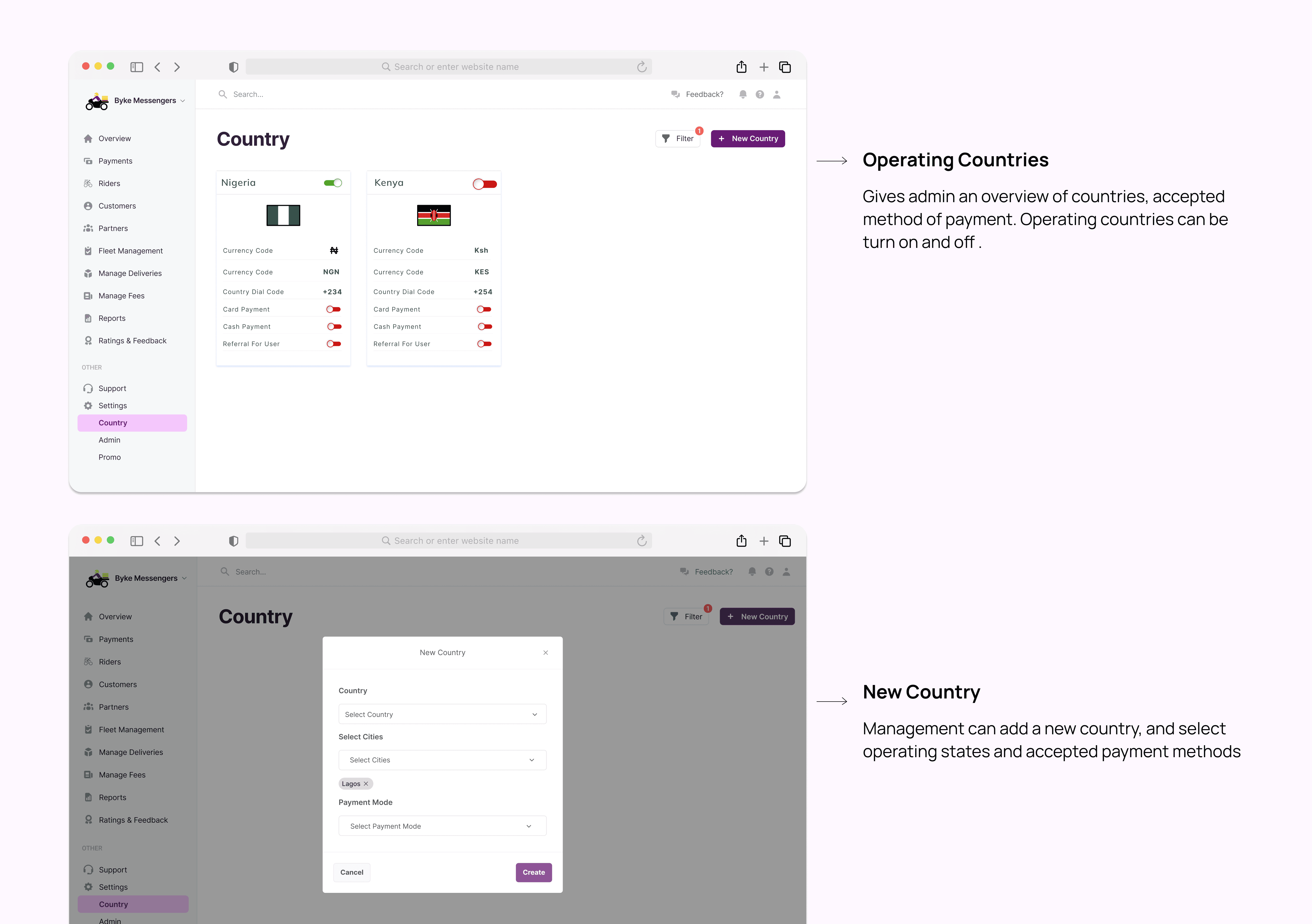
Implement a country management feature that allows admins to add new countries or cities of operation easily, ensuring scalability as the business grows.
Learnings
My journey taught me that building strong relationships with stakeholders is essential for gathering insights that drive project success. Coordinating interviews and user testing sessions often required significant effort, including travel to various locations. This experience highlighted the importance of proactive communication and planning. I learned that investing time in nurturing these relationships is vital for aligning everyone with project goals.
Initially, my focus was on automating processes to reduce manual entry for the accounting team. However, after visiting the dispatchers and observing their daily tasks, I realized how tedious their work was during peak periods. They were overwhelmed with calls from riders and had to search for contact information manually. This firsthand experience opened my eyes to the broader pain points they faced, reinforcing the need for solutions that genuinely address user needs.
As we developed the dashboard, I grappled with the temptation to incorporate complex features that showcased innovation. However, I learned that simplicity often leads to greater user satisfaction. By focusing on user-centric design principles and streamlining processes, we created a platform that was not only functional but also intuitive and easy to navigate.
Balancing design aspirations with budget constraints was a valuable lesson learned during this project. I realized that aligning our solutions with financial realities ensures both user satisfaction and business viability. This experience taught me how to be resourceful and innovative while still delivering high-quality outcomes.
Next Steps
Conduct comprehensive training sessions for all users, including dispatchers, Country Managers, and administrators. This will help them familiarize themselves with the new dashboard features and functionalities, ensuring a smooth transition from the previous systems.
Create a structured feedback mechanism that allows users to report issues, suggest improvements, and share their experiences with the dashboard. Regularly review this feedback to identify trends and prioritize enhancements.
Copyright 2024 by Adewale Michael